News

Soil and Water pH - Part 3

The pH of soil and water and how it affects plant growth and chemical makeup of soils and media is somewhat detailed.  In the next five newsletters, we will present different aspects about pH.  Once complete, one should have a thorough understanding of pH and how it influences plant production.

Part I – What is pH?

Part II – How is nutrient availability affected by pH

Part III – How do fertilizers affect pH?

Part IV – How to adjust pH of soils

Part V – How to adjust pH of irrigation waters

Recognizing Water-Related Disease Issues in Container Nurseries

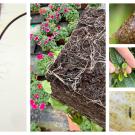
Between the many production systems used in the nursery and greenhouse industry, a one-size-fits-all watering solution does not exist, even for a one-gallon pot. Still, there are common concerns when it comes to how water moves, where it lingers, and the impacts for plant health. While research and testing are critical for identifying specific pathogens like Phytophthora, Pythium, and Rhizoctonia, many outbreaks begin with simple environmental conditions that go unnoticed. For growers, recognizing water-related warning signs can be just as important as selecting a fungicide.

Santa Monica Mountains Native Seed Farm

The Santa Monica Mountains (SAMO) are home to a national recreation area in Ventura County. The park provides habitat for local wildlife and hundreds of miles of trails for visitors. They also have a particularly unique component for a protected park: an active nursery and farm.

Pipe Dreams and Pressure Gauges


We are all feeling the pressure of summer heat, and so are our irrigation pipes! Fortunately, the pipes aren’t cracking (reminder to check your pressure regulators), and neither are California’s nursery growers. A recent hands-on irrigation training designed to help nursery growers improve water use efficiency and system performance was led by UC Cooperative Extension Advisors. The training provided both foundational knowledge and practical demonstrations tailored for container nursery systems.

Technical Irrigation Trainings in California


University of California Cooperative Extension Advisors trained 107 nursery professionals during nine technical irrigation trainings at California nurseries in 2025. Trainings were conducted in either Spanish, English, or both languages, to accommodate the diverse workforce of the nursery industry. In the trainings, we covered the basics of plant physiology, soilless substrate science, and irrigation best management practices to improve water-use efficiency and plant health.

Accreditation to Improve Restoration:

Phytophthora diseases are a growing concern to restoration and nursery plant production that have led to huge economic and ecological losses. Here in California, most people may know of Phytophthora (lit. “plant destroyer”) from the devastating outbreak of Sudden Oak Death, caused by the aerial Phytophthora ramorum, in the 1990s – 2000s in Northern California and Southern Oregon.

UCNFA Spring Issue 2025

In this Spring 2025 issue, our Featured Articles present important updates on pests of nursery plants relevant to the nursery industry in California, including the Dotted Paropsine Leaf Beetle threatening Eucalyptus and the detection of invasive Thrips parvispinus in San Diego. In the Science to the Grower section, we discuss why nursery irrigation and fertilization methods should complement each other, assessing the benefits and drawbacks of liquid and controlled release fertilizers and how these methods relate to irrigation.

The Dotted Paropsine Leaf Beetle Threatens California’s Eucalyptus


Eucalyptus trees are an iconic part of Californias landscape. The famous journalist Harold Gilliam once wrote, “the Eucalyptus seems an indispensable element of this State’s landscapes, as indigenously Californian as the redwoods, the poppy fields, the long white coastal beaches, and the gleaming granite of the High Sierra”. Introduced in the mid-1800s as a fast-growing source of timber, the trees were also used for firewood, oil production, and reforestation. Plantings peaked during the “eucalyptus craze” of the 1870’s and the “eucalyptus boom” of 1907.

Thrips parvispinus Invades California

Southern California is a hub for nursery and floriculture production in the United States, with a mild climate that allows many kinds of plants and flowers to grow. Unfortunately, this also makes the area vulnerable to a wide range of invasive pest species, among them, Thrips parvispinus.